

Introduction
If you’ve spent any time researching online business models, you’ve run into the phrase “affiliate marketing” roughly four hundred times. Half the articles explaining it sound like they were written by someone who’s never actually done it, and the other half are sales pages for courses that promise you can quit your job by Friday. Neither version helps if you’re trying to figure out what the term actually means.
The simplest affiliate marketing definition is this: you recommend a product, someone buys it through a link you provide, and the company pays you a percentage of the sale. That’s the entire model in one sentence. Everything else is mechanics, terminology, and edge cases.
This guide unpacks those mechanics, walks through the terminology you’ll encounter, and clears up a handful of stubborn misunderstandings about what affiliate marketing is and what it isn’t. By the end, you’ll have a clear picture of the model itself, separate from the question of whether you should pursue it.
Key Takeaways
- Affiliate marketing is a performance-based business arrangement in which a company pays you a commission for driving a sale, lead, or sign-up through a unique tracking link.
- The model has four parties: the merchant who owns the product, the affiliate who promotes it, the customer who buys it, and the network or platform that tracks who deserves credit.
- Commissions are calculated under specific structures (CPS, CPA, CPL, recurring) and are tied to a cookie window that determines how long after a click you still earn commission on a purchase.
- Affiliate marketing is often confused with multi-level marketing, dropshipping, sponsorships, and basic referral programs. None of these are the same thing.
- Understanding the model is the foundation. Acting on it is a separate decision, and one worth taking seriously before you commit to it.
The Plain-English Affiliate Marketing Definition
The formal definition reads something like this: Affiliate marketing is a performance-based marketing arrangement in which a company (the merchant) compensates an independent third party (the affiliate) for driving a specified action, typically a sale, lead, or signup, through a uniquely attributed referral link.
In practice, that means you don’t have to make a product, ship anything, handle returns, or talk to customers. You introduce a buyer to a seller and take a cut when a purchase happens. The seller handles the rest.
The Federal Trade Commission treats this arrangement as a paid endorsement, which is why you’ll see disclosure language at the top of affiliate articles. The FTC requires that the relationship be disclosed clearly because readers are entitled to know when a recommendation comes with a financial incentive attached. That disclosure rule is the regulatory backbone of the model in the United States.
The reason affiliate marketing exists at all is simple math. Acquiring a customer through paid ads is expensive and unpredictable. Paying a percentage of a sale to someone who already has the buyer’s attention is cheaper, more measurable, and only incurs a cost for the company when it actually works. That’s why nearly every major retailer, software company, and online course platform runs some kind of affiliate program.
How the Mechanics Actually Work
The plumbing behind affiliate marketing is more interesting than the elevator pitch suggests.
When you join an affiliate program, the company generates a unique tracking link tied to your account. When a reader clicks that link, a small piece of data, usually a cookie, gets stored in their browser. The cookie says, in effect, “this visitor was sent here by affiliate #4827.” If the visitor buys the product within a defined time window, the system credits affiliate #4827 with the sale and queues up a commission.
That window is called the cookie duration. It varies wildly by program. Amazon’s cookie lasts 24 hours. Many software companies use 30, 60, or 90 days. Some lifetime programs credit the affiliate forever, as long as the customer keeps paying.
Attribution gets murky when a buyer clicks multiple affiliate links before making a purchase. The default rule across most networks is “last click wins,” meaning the most recent affiliate link clicked before purchase gets the credit. Some programs use first-click attribution or split credit across multiple affiliates, but last-click remains the standard.
Payouts work on a delay. Most programs hold commissions for 30 to 60 days before paying them out, partly to account for refunds and partly to verify the sales aren’t fraudulent. You’ll see terms like “locked” (commission confirmed and payable) and “pending” (sale recorded but not yet final).
That delay is what surprises newer affiliates the most. The dashboard might show $400 in commissions on the first of the month, but the money may not hit your bank account until two payout cycles later.
The Four Parties That Make the Model Work
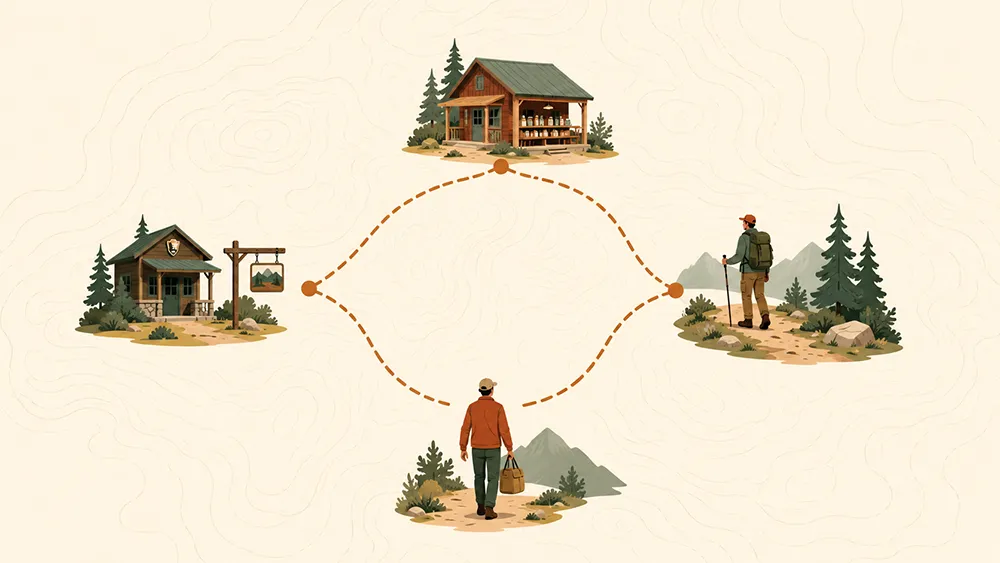
Every affiliate transaction involves four roles, though sometimes one entity plays two of them.
The merchant is the company selling the product or service. They define the commission rate, cookie duration, program terms, and the rules governing how affiliates may promote them.
The affiliate is the person or business promoting the product. That’s where you fit in if you decide to pursue this. You create content, place links, drive traffic, and earn commissions when the links convert.
The customer is the buyer. They click an affiliate link, complete a purchase, and (in nearly all cases) pay exactly the same price they would have paid if they had gone directly to the merchant. The commission comes out of the merchant’s margin, not the customer’s wallet.
The network or platform is the tracking layer. Networks like ShareASale, Impact, CJ Affiliate, and Awin sit between thousands of merchants and tens of thousands of affiliates, handling the link generation, click tracking, reporting, and payouts. Some companies run their own in-house affiliate programs and skip the network entirely. The function is the same either way.
If you’ve ever studied a topographical map before a backcountry trip in Zion National Park, you already understand this structure. The map doesn’t take you up the trail, but it shows you who controls what land, where the boundaries sit, and which routes are sanctioned. The four parties in affiliate marketing work the same way. Each one controls a piece of the terrain, and the deal only works when all four pieces fit together correctly.
The Commission Structures You’ll Hear About
Understanding the model gets more useful when you know the specific ways commissions are calculated. You’ll see these terms thrown around in program descriptions and affiliate forums.
CPS (Cost Per Sale) is the most common structure. The affiliate earns a percentage of each completed sale. Amazon Associates is CPS. Most retail and software affiliate programs are CPS.
CPA (Cost Per Action) pays the affiliate when a visitor completes a defined action that isn’t necessarily a purchase. That might be filling out a form, requesting a quote, or signing up for a free trial. Insurance and financial services programs often use CPA structures.
CPL (Cost Per Lead) is a narrower form of CPA, paying the affiliate for each qualified lead delivered. Common in B2B software and lead-generation niches.
Recurring commissions pay the affiliate every billing cycle the customer remains subscribed. SaaS companies use this model heavily because it aligns the affiliate’s incentive with long-term customer retention.
Hybrid structures combine elements. A SaaS company might pay a one-time bonus on signup plus a smaller recurring commission. A course creator might pay a higher rate on the front-end product and a lower rate on upsells.
The commission rate itself ranges from around 1% for low-margin physical goods to 50% or more for digital products. Higher rates aren’t automatically better. A 50% commission on a product no one wants pays exactly $0.
What Affiliate Marketing Is Not
A surprising amount of confusion about the affiliate marketing definition comes from mixing it up with other models that look superficially similar. Here’s how it differs from the four it’s most often confused with.
Affiliate marketing is not multi-level marketing (MLM). MLM compensates participants both for their own sales and for recruiting other participants who then sell as well, creating a downline. Affiliate marketing pays you only for sales you personally drive. There is no recruiting, no downline, and no tiered structure where senior people earn from the work of those below them. If a program asks you to recruit other affiliates and earn from their sales, that’s MLM wearing affiliate clothing.
Affiliate marketing is not dropshipping. Dropshipping is a retail model in which you operate an online store, take customer orders, and forward them to a supplier who ships the product. You set the price, you handle customer service, and you carry the financial risk. In affiliate marketing, the merchant handles all of that. You just send traffic.
Affiliate marketing is not a referral program. Referral programs typically reward existing customers for bringing in new customers, often with credits, discounts, or small bonuses. They’re closed loops aimed at reducing customer acquisition cost. Affiliate programs are open to anyone who applies and meets the program’s requirements, and they pay in cash rather than store credit.
Affiliate marketing is not a sponsorship. Sponsorships pay creators a flat fee to mention or feature a product, regardless of whether viewers actually buy. Affiliate marketing pays only on performance. A creator with a sponsored video gets paid the same amount whether the brand makes 10 sales or 0. An affiliate gets paid based on what the audience actually does.
These distinctions matter when you’re evaluating opportunities. A program calling itself “affiliate” while compensating you for recruiting others is operating under a different model with different legal exposure. A program offering store credit instead of cash is a referral program. Knowing the difference protects you from signing up for something other than what you thought you were signing up for.
A Quick Glossary of Affiliate Terms
A few additional terms come up often enough that they’re worth knowing.
- EPC (Earnings Per Click): Average commission earned per click on an affiliate link. A rough quality signal for how well a program converts.
- AOV (Average Order Value): The average size of a purchase made through the affiliate link. Higher AOV typically means higher commissions per sale.
- Conversion Rate: The percentage of clicks that result in a completed sale or action.
- Reversal: A commission that gets reversed, usually because the customer refunded the purchase.
- Payout Threshold: The minimum balance you need to accumulate before the program will issue a payment. Often $50 or $100.
- Network ID / Affiliate ID: The unique identifier the network uses to credit your account. Visible inside your tracking links.
- Creative: Banners, images, and copy provided by the merchant for affiliates to use in their content.
These terms appear on every affiliate dashboard and in nearly every program agreement. Reading them fluently saves you from feeling lost on your first few logins.

Is the Affiliate Model a Fit for You?
Understanding the model and affiliate marketing definition is one thing. Deciding whether to actually pursue it is another. I believe it’s a great model for solopreneurs like me, but you need to analyze your risk tolerance and what you truly want from an online business.
The model rewards a specific type of work: producing genuinely helpful content over an extended period, learning the search behavior of a real audience, and recommending products you’d recommend to a friend even without the commission. It’s closer to the patient pace of section-hiking the Appalachian Trail across Great Smoky Mountains National Park than it is to a sprint up a single peak. Most of the rewards arrive late, after the trail has compounded behind you.
If that pace sounds workable, the next step is figuring out where to plant your first content stake. The full walk-through for that lives in the Affiliate Marketing for Beginners roadmap, which covers niche selection, platform choice, program research, and the realistic timeline to your first $1,000.
If the pace sounds intolerable, that’s worth knowing now, too. The affiliate model is genuinely flexible, but it isn’t fast. In reality, most businesses that gain initial traction fail in year two. However, it can be a fantastic path to an emotionally freeing lifestyle business.
Frequently Asked Questions
Is affiliate marketing legal?
Yes. Affiliate marketing is a recognized and well-established business model. In the United States, the main legal requirement is clear disclosure of the affiliate relationship, governed by the FTC’s endorsement guidelines. Most other countries have similar rules. As long as you disclose, follow each program’s terms, and avoid making false claims about the products you promote, you’re operating well within the law.
Do affiliate links cost the buyer anything extra?
Almost never. The price the customer pays is the same whether they use an affiliate link or go directly to the merchant. The commission comes out of the merchant’s marketing budget, not the buyer’s pocket. A small handful of programs offer affiliate-exclusive discounts that actually make the price lower for the buyer, but you’ll rarely, if ever, pay more for using an affiliate link.
How is affiliate marketing different from influencer marketing?
Influencer marketing is the broader category. Influencers might be paid through flat sponsorships, affiliate commissions, free product, or any combination of these. Affiliate marketing specifically refers to performance-based payment tied to a tracked action. A creator can be an influencer without being an affiliate, and an affiliate doesn’t need to be an influencer at all. Many successful affiliate websites have no public-facing personality at all.
Can you do affiliate marketing without a website?
Technically, yes, but it’s harder than it looks. Some affiliates use YouTube, podcasts, newsletters, or social media as their primary platform. Many programs still prefer applicants who have a website or blog because a site demonstrates a stable platform for hosting content and directing traffic. A modest website is one of the lower-friction starting points for most beginners.
If you are thinking of starting a website or blog, I highly recommend using Verpex Hosting. It will provide you not just a great starting point, but also enable you to grow. A few years ago, I combined all my sites into one of their reseller accounts, deployed each of my websites with Elementor, and I even wrote a post about my multi-site setup.
What does “performance-based” actually mean?
It means the affiliate only earns when a defined action happens. No clicks, no commission. No sale, no commission (in CPS programs). The merchant only pays for results, which is part of why companies are willing to offer relatively generous commission rates. You’re taking the risk that your work converts. They’re taking the risk that they pay you what your work is worth.
How long does it take for an affiliate program to approve my application?
Anywhere from instant to several weeks. Large public networks like Amazon Associates approve quickly. Smaller direct programs, especially in regulated industries like finance, can take several weeks while they review your site and content. Some programs reject applicants whose sites don’t yet meet a minimum quality bar, which is normal and not a permanent verdict.
Do I need to pay to join affiliate programs?
No. Legitimate affiliate programs are free to join. If a program asks you to pay an upfront fee to become an affiliate, treat that as a warning sign and look more closely at what they’re actually selling. Real affiliate programs make money when you make sales for them, not by charging you to participate.
A Last Word
The affiliate marketing definition is straightforward once you strip away the noise. A company pays you for sending them paying customers. Everything else is just terminology, structure, and the question of whether the model fits your situation.
If you decide it does, the next step is mapping the route. Standing at the trailhead of Kings Canyon National Park with a map in hand isn’t the same thing as walking the trail, but you wouldn’t want to attempt one without the other. If you’d like to hike with me as I build this website, consider joining my Building a Profitable Online Business video series.